Archives of Community Medicine and Public Health
Knowledge, Attitudes and Practices (Kap) Regarding Early Childhood Caries among Nurses Working in a Low Socio-Economic Area
Author and article information
Cite this as
Mohamed N, Barnes J (2015) Knowledge, Attitudes and Practices (Kap) Regarding Early Childhood Caries among Nurses Working in a Low Socio-Economic Area. Arch Community Med Public Health 1(1): 001-005. DOI: 10.17352/2455-5479.000001
Copyright License
© 2015 Mohamed N, et al. This is an open-access article distributed under the terms of the Creative Commons Attribution License, which permits unrestricted use, distribution, and reproduction in any medium, provided the original author and source are credited.Abstract
Aim: Chronic kidney disease (CKD) is a risk factor for stroke and in-hospital mortality due to stroke. Stroke is highly prevalent in CKD patients. Our aim was to evaluate the impact of glomerular filtration rate in acute ischemic stroke (IS) patients after thrombolytic therapy.
Methods: All patients who underwent thrombolytic therapy for acute IS in our Department between 2009 and 2012 were studied retrospectively. Age, co-morbidities, blood pressure, glycaemia, National Institutes of health Stroke Scale score were evaluated. Renal function was estimated by CKD-EPI equation. Three-month outcome (death, residual disability, intracranial hemorrhage) in patients with glomerular filtration rate (GFR) <60 ml/min/1.73m2 was compared to that of patients with GFR ≥ 60 ml/min/1.73 m2. Logistic regression analysis was used to determine which factor was independently associated with outcome.
Results: Among 191 patients treated for acute IS, 74 had GFR<60 ml/min/1.73m2. They were older and had higher prevalence of hypertension than patients with normal filtration rate. We found no differences in 3-month death or poor outcome between the two groups. However, patients with impaired renal function had a significantly higher risk of hemorrhagic complication (OR = 2.5; 95% CI = 1.1-6.2, p<0.01).
Conclusion: GFR<60 ml/min/1.73m2 significantly affects the risk of intracranial hemorrhage in stroke patients treated with thrombolytic therapy. Hence, subjects with reduced renal function eligible for intravenous thrombolysis could be informed about the increased ICH risk.
Introduction
Early Childhood Caries (ECC) has been recognized by the American Academy of Pediatric Dentistry [1] as a "significant public health problem" and it still affects a large number of children worldwide [2],[3]. Dye et al. [3], stated that dental caries is "the most common chronic disease of childhood in the United States".
Even though caries in itself is not life-threatening, the extent of this oral health problem is of major significance as it ultimately has an impact on general health and well-being and affects the quality of life. Untreated dental caries can lead to abscess formation and the resultant pain can influence the ability of children to function optimally in their day to day lives [4].
Decay of the primary dentition is also one of the main reasons why children are hospitalized [2]. These children are often under the age of 5 years, cooperation is usually poor. This means that more expensive treatment options such as general anesthesia or sedation have to be considered in most cases [4],[5].
For the most part, childhood dental caries is a preventable disease [1]. If one takes into consideration that the health care system is already overburdened, emphasizing prevention and reducing the prevalence of ECC would reduce the demand for general anesthesia services, thereby cutting costs.
In poorer communities, nurses who are involved with primary patient care are usually the first health care professionals to come into contact with the general public. They are employed in a variety of health settings and are therefore in a unique position to be able to play an important role in health promotion.
Where there is limited access to health care, these nurses are often the first and only link that poorer communities have to medical care of some sort. This is often also the only source of information parents have to health matters. Nurses are expected to have knowledge of a wide range of issues and need to be on the forefront of prevention in general. Oral health awareness has however been neglected in the greater scheme of things with infectious diseases such as HIV and TB receiving the most attention. Yet, oral health is an important component of overall health and, if neglected, can ultimately have a negative impact on the rest of the body [6].
Children from the lower socio-economic groups tend to only visit a dentist when they have pain [7],8]. They are more likely to visit a doctor for an overall check-up than they are to pay a visit to the dentist [9],[10]. As nurses frequently come into contact with parents and children, they are in a position to impact positively on children's oral health from a young age.
The high prevalence of ECC (71.6%) amongst children from a lower socio-economic sub-district in Cape Town implies that important information regarding oral health is not filtering through to these communities. The situation regarding the awareness and knowledge of primary health care workers in this economically disadvantaged area was unknown. Nurses at these facilities where the high prevalence of ECC was recorded were therefore targeted at the subjects of the present investigation. A survey was therefore carried out among these nursing professionals at various community-based clinics, day hospitals, immunization clinics, well-baby clinics and the pediatric ward of a hospital in order to assess their knowledge of these professionals regarding oral health matters.
Early identification and intervention for infants and toddlers at high risk of developing dental caries are crucial and guidance from primary health care providers can greatly ameliorate this high caries prevalence [4],[11].
Methods
All the nurses at these various health facilities who agreed to participate were asked to complete questionnaires with basic open and closed-ended questions regarding oral health. A total of 83 nurses completed the questionnaire. This served to assess their knowledge of oral health matters and determine the role that they can play in the prevention of this disease. The knowledge, attitudes and practices regarding ECC was ascertained in order to establish whether these nurses examine the oral status of children and whether they advise the caregivers on proper prevention of ECC.
Only nursing staff who had direct patient contact were included in the study. Informed consent was obtained from the Department of Health, participants and the superintendent of each facility. Only those who agreed to participate were given copies of the questionnaire to complete.
Results
Forty-six percent of nurses interviewed admitted to only visiting the dentist when there was a problem and only 22% complied with the recommended twice-yearly dental visit.
Discussion
The overwhelming majority (84%) of the participants in this study rated the importance of oral health as 7 out of 10 or above, yet, this is not reflected in the frequency of dental visits. Participants usually only visited the dentist when they had toothache. A similar trend was noted in a study by Walid et al. [12], where 60% of nurses only made use of dental services when they needed to.
In the group of children visiting these health care facilities, the highest caries prevalence was found to be in the 3 year to 3 years and 11 months age group. The first dental visit should therefore ideally take place before this time so that preventive measures can be instituted, thereby preventing caries progression in this vulnerable group of patients. Interestingly, 57% of nursing professionals in the present survey suggested that children should visit the dentist for the first time at 2 years of age or older (Table 1). By that time a large number of children would already be affected by the carious process and curative measures rather than preventive measures might be needed. According to the American Academy of Pediatric Dentistry guidelines [1],[13], dental counseling and examinations should take place within 6 months of eruption of the first primary tooth and no later than one year of age. Most children have had some contact with primary health care workers by the age of 1 year.
Table 1:
Nurses' suggested age for child's first dental visit.
A change in mindset first needs to occur among these nursing professionals if they are to effect a change in the mindset of their patients. By improving their own oral health and developing a more positive attitude towards dental care, they are more likely to encourage their patients to do the same.
Questions regarding general oral health included in the questionnaire aimed to assess knowledge on the causes of cavities and how they could be prevented. Answers provided revealed that more than 80% of them knew what causes cavities and how to prevent it (Table 2). Yet, just over 40% of them had heard of ECC and how it could be prevented. In general, approximately 60% of the nurses themselves felt that their knowledge regarding oral health matters was lacking. Ogunbodede et al. [6] and Walid et al. [12], found that participants in their studies possessed only very basic knowledge of oral health and prevention.
Table 2:
General knowledge and prevention.
There is a clear gap in the knowledge as to the value of preserving the primary dentition. Even though 92.8% of the participants in the present study felt that "milk teeth are important", only 43% of them indicated that primary teeth should definitely be restored (Table 2). This mindset was perpetuated among the parents attending these facilities who preferred extractions to restoring their children's teeth.
Implementation of simple preventive measures such as fluoride application by primary health care workers could be a valuable tool for preventing caries, especially in high risk patients [14],[15]. As was the case in Lewis et al's study [7], it is clear that the participants in the present study had very limited knowledge about preventive measures like fluoride varnish and fissure sealants. Even though 85.5% of nurses had heard of fluoride and claimed to know what it does, nearly half had no idea what fluoride varnish was (Table 2). In the present study, only about 50% of nurses knew that the child's overall fluoride intake needs to be assessed before prescribing supplements.
In excess of 90% of respondents recognized that putting a child to bed with a bottle was not an appropriate practice. From around the age of 1 year, children should start drinking from a cup and should be weaned off the bottle by the age of 14 months [1]. Only 28% of respondents stated that children should be weaned off the bottle by their first birthday (Table 3).
Table 3:
Nurses' suggested age for cessation of bottle-feeding.
The majority of responses obtained regarding the cessation of breastfeeding are in accordance with the guidelines provided by the South African Department of Health [16]. The guideline recommends "exclusive breastfeeding for the first 6 months and continued breastfeeding up to two years of age or beyond". This is similar to the World Health Organization (WHO) guidelines which recommend breastfeeding up until the age of 6 months. However, no real consensus has been reached in the literature regarding the duration of breastfeeding. According to the American Academy of Pediatric Dentistry guidelines [1], on demand breastfeeding should be discouraged once the first tooth has erupted. The American Academy of Pediatrics [17] suggested breastfeeding duration for 6 months to "at least the 1st year of life". After 7 years, the recommendation remains unchanged in a follow-up policy document [18]. In general, most sources agree that the duration of breastfeeding should be at least six months. It is however imperative that the importance of oral hygiene measures after feeds be stressed.
When it comes to general dietary advice, health care workers can also provide parents with information regarding healthy eating patterns and food choices [19]. All participants agreed that diet plays a role in dental health and that parents should be counseled about their child's diet. None of them felt that parents/siblings sharing utensils and toothbrushes were acceptable practices.
It is disquieting to note that 45.5% of nurses felt that children younger than 1 year of age were capable of brushing their own teeth. Just over 50% of them felt that children between the ages of 2 and 6 years were able to brush their teeth on their own (Table 4). They were unaware that children need to be actively assisted with tooth brushing, sometimes up to the age of 10 years, as they do not have the necessary dexterity to perform the task adequately [1],[20]. Only 6 participants knew that a child's teeth should be cleaned as soon as they erupt in the mouth. Two nurses stated that children should brush their teeth on their own when they are able to but did not stipulate what age this should be.
Table 4:
Nurses' suggested age when a child can start brushing his/ her own teeth.
Approximately 90% the nurses knew what dental floss was and thought that it was necessary to floss one's teeth. However, when asked whether it was necessary to floss a child's teeth, the number of positive responses dropped by 21.7%.
Even though the attitude of the nurses towards providing an oral screening service was mostly positive, nearly 10% of respondents felt that performing oral examinations fell outside the scope of their jobs and that they were not trained to do so. Staff shortages and time constraints were two of the reasons provided why oral examinations are not performed routinely.
A single well-baby visit can often be very demanding as many tasks have to be completed during this visit. In such cases, more important issues would take precedence over oral health [7],[8],[14], Pierce et al. [21] suggested that "dental screening could easily be incorporated into a busy pediatrics practice". Wagner, [22] a pediatrician by profession, found that it takes less than 30 seconds to inspect the teeth and the perceived "lack of time" should not be a deterrent to performing this task. He claimed that time could be maximized by talking about nutrition, feeding habits and oral hygiene while performing the examination. This sharing of information can happen from as early as the prenatal period and can then be reinforced at each well-baby visit [23].
Newborn nurseries and well-baby appointments have been suggested as the ideal non-threatening environment to introduce prevention for children and educate their parents about oral health care [23],24]. By utilizing these visits, opportunities for oral screenings before the age of two years are increased seven-fold when compared with dental visits [8].
Nearly half of the nursing professionals (40/ 83) did not perform oral examinations routinely. Despite this, 69.8% of all the respondents felt that incorporation of a dental examination into the routine examination was a good idea.
When asked about whether their undergraduate curriculum contained information on giving advice to parents regarding oral hygiene and feeding practices, more than 80% of respondents indicated "yes" on both counts. Approximately 65% of nurses claimed to have been taught about the cessation of bottle feeding, yet only 20.5% of them got the answer right (Table 3).
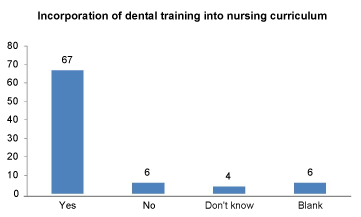
In the present study, approximately 80% of respondents (67/ 83) felt it was necessary to include information on prevention and oral health in the undergraduate curriculum (Figure 1). They felt they needed to be taught how to perform an oral examination as it would help with the diagnosis of ear, nose and throat (ENT) problems and thrush. It would also help with the early identification of abscesses, caries and other oral problems.
Nurses' lack of knowledge on oral health matters demonstrated in the present study raises questions as to the adequacy of the content being offered on this subject in the nursing curriculum. Several attempts to contact the South African Nursing Council to obtain official information regarding the content of the present nursing diploma curriculum proved to be fruitless (Table 5). From informal conversations with nurses involved with the training of nursing students, it seems as though the current curriculum being offered at nursing schools in the Western Cape does not include adequate information regarding oral health prevention and feeding practices. The knowledge of nurses regarding various aspects of oral health is seriously lacking.
Table 5:
Suggested content for inclusion in curricula of health-related professions.
Primary health care workers have an invaluable contribution to make in terms of improving the oral health of these underserved communities especially where there is a shortage of oral health professionals [2],[12].
Raising awareness of oral health amongst nursing staff is therefore imperative. Health care workers are generally not keen to give advice on topics with which they are unfamiliar [7],[8],[10],[14],[21]. Providing nurses with the necessary skills will enable them to perform these tasks with confidence and they would thus be more likely to put into practice what they have learnt.
By training primary health care workers to understand the dental caries process and gain competency in identifying basic oral health problems, patients who need dental treatment can be referred early so as to reduce the need for more complex dental treatment at a later stage.
Training sessions of short duration were shown to enable non-dental personnel to identify cases in need of referral [21]. Pierce et al. [21] showed that primary care providers achieved an acceptable level of proficiency at identifying cavitated lesions after only 2 hours of training in infant oral health.
Health professionals should also be able to give basic advice regarding feeding practices and diet and encourage parents to take their children for their first dental visit by the age of 12 months [1]. Long-term use of sweetened medications has also been linked to caries development [25] and parents should be informed of sugar-free alternatives that are available.
Pregnant mothers should especially be targeted so as to raise awareness of the importance of oral health and mothers should be made aware of the importance of their own oral hygiene in order to reduce the risk of transmission of Streptococcus mutans to their children.
Conclusion
It is clear from the results of this study that knowledge of oral health related matters is lacking in the group of health care workers surveyed. This suggests that the oral health knowledge received during training is inadequate.
It is therefore important that information on oral health prevention be incorporated into the undergraduate curricula before these professionals are expected to provide this service to their patients [15]. In addition to improved access to health care, a "greater integration of dentistry with medicine and other health and social systems serving children and families", is needed [26],[27]. Gaps in the primary health care settings can be filled by overlapping the roles of health care providers and providing "cross-disciplinary education" [28],[29] where basic oral health messages are incorporated into existing health promotional material. In so doing, the message of prevention can reach more patients and they can be treated more efficiently. This type of interdisciplinary care or team approach to oral health promotion will ensure that patients are able to receive the best possible holistic care, especially in the rural communities where access to dental care is currently limited.
As nurses are on the frontline when it comes to the provision of health care, investing in training and education should be a priority. The training of public health nurses who come into contact with the public at community level and deal with mothers and children on a daily basis should receive particular attention, especially in areas where there is a shortage of dental personnel. They should be empowered to advise parents on proper oral hygiene, diet and the prevention of tooth decay. By expanding the curriculum to include training in oral health matters and by raising awareness as to the importance of oral health, inroads can be made into tackling the huge problem of ECC.
References
- American Academy of Pediatric Dentistry (AAPD). Policy on Early Childhood Caries (ECC): Classifications, Consequences and Preventive Strategies. Reference manual 2012-2013; 34 (6): 50- 52.
- Plutzer K, Spencer J (2008) Efficacy of an oral health promotion intervention in the prevention of early childhood caries. Community Dent Oral Epidemiol 36: 335- 346.
- Dye BA, Arevalo O, Vargas CM (2010) Trends in paediatric dental caries by poverty status in the United States, 1998-1994 and 1999-2004. Int J Paediatr Dent 20: 132- 143.
- Kagihara LE, Niederhauser VP (2009) Stark M. Assessment, management and prevention of early childhood caries. J Am Acad Nurse Pract 21: 1-10.
- Petersen PE, Bourgeois D, Ogawa H (2005) The global burden of oral diseases and risks to oral health. Bull World Health Organ 83: 661- 669.
- Ogunbodede EO, Rudolph MJ, Tsotsi NM, Lewis HA, Iloya JI (1999) An oral health promotion module for the primary health care nursing course in Acornhoek, South Africa. Public Health Nurs 16: 351- 358.
- Lewis CW, Grossman DC, Domoto PK (2000) The role of the Pediatrician in the oral health of children: A national survey. Pediatrics 106: e84.
- Gonsalves WC, Skelton J, Heaton L, Smith T, Feretti G, et al. (2005) Family medicine residency directors' knowledge about pediatric oral health education for residents. J Dent Educ 69: 446- 452.
- Pahel BT, Rozier RG, Stearns SC, Quiñonez RB (2011) Effectiveness of preventive dental treatments by physicians for young Medicaid enrolees. Pediatrics 127: e682- e689.
- de la Cruz GG, Rozier RG, Slade G (2004) Dental screening and referral of young children by pediatric primary care providers. Pediatrics 114: e642-652.
- Tyagi R (2008) The prevalence of nursing caries in Davangere preschool children and its relationship with feeding practices and socioeconomic status of the family. J Indian Soc Pedod Prev Dent 26: 153- 157.
- Walid EI, Nasir F, Naidoo S (2004) Oral health knowledge, attitudes and behaviour among nursing staff in Lesotho. SADJ 59: 288- 292.
- American Academy of Pediatric Dentistry (AAPD). Guideline on Infant Oral Health Care. [Online] Reference manual, 2012- 2013; 34 (6):132- 136.
- Mouradian WE, Schaad DC, Kim S, Leggott PJ, Domoto PS, et al. (2003) Addressing disparities in children's oral health: a dental-medical partnership to train family practice residents. J Dent Educ 67: 886- 895.
- Graham E, Negron R, Domoto P, Milgrom P (2003) Children's oral health in medical curriculum: a collaborative intervention at a university-affiliated hospital. J Dent Educ 67: 338- 347.
- Department of Health (South Africa). South African Infant and young child feeding policy, 2013.
- American Academy of Pediatrics (2005) Policy statement: Breast-feeding and the use of human milk. Pediatrics 115: 496- 506.
- American Academy of Pediatrics (2012) Policy statement: Breast-feeding and the use of human milk. Pediatrics 129: e827- e841.
- Mobley C, Marshall TA, Milgrom P, Coldwell SE (2009) The contribution of dietary factors to dental caries and disparities in caries. Acad Pediatr 9: 410- 414.
- Sandström A, Cressey J, Stecksén-Blicks C (2011) Tooth-brushing behavior in 6-12 year olds. Int J Pediat Dent 21: 43- 49.
- Pierce KM, Rozier RG, Vann WF Jr (2002) Accuracy of pediatric primary care providers' screening and referral for early childhood caries. Pediatrics 109: e82- 82.
- Wagner R (2006) Letters to the editor. J Am Dent Assoc 137: 150- 152.
- Hallas D, Fernandez J, Lim L (2011) Nursing strategies to reduce the incidence of early childhood caries in culturally diverse populations. J Pediatr Nurs 26: 248- 256.
- Drummond BK, Clarke HM, Maxwell-McRae AM, et al. (2002) Oral health knowledge of Plunket nurses in New Zealand: evaluation of an oral health module. NZ Dent J 98: 64- 66.
- Kumarihamy SL, Subasinghe LD, Jayasekara P, Kularatna SM, Palipana PD (2011) The prevalence of Early Childhood Caries in 1-2 yrs olds in a semi-urban area of Sri Lanka. BMC Res Notes 4: 336.
- Mouradian WE (2001) The face of a child: children's oral health and dental education. J Dent Educ 65: 821- 831.
- Mouradian WE, Berg JH, Somerman MJ (2003) Addressing disparities through dental-medical collaborations, Part 1. The role of cultural competency in health disparities: training of primary care medical practitioners in children's oral health. J Dent Educ 67: 860- 868.
- Wessel LA (2005) Nurse practitioners in community health setting today. J Health Poor Underserved 16: 1- 6.
- Hallas D, Shelley D (2009) Role of pediatric nurse practitioners in oral health care. Acad Pediatr 9: 462- 466.
Advertisement